 Interview Sarthi
Home › Guides › Reason for job change
Reason for job change: what to say, and what never to
Every switch has two true stories: the one about what you're escaping and the one about what you're building. Tell the second one. Here's how, with scripts.
How to use these examples: These are our practice suggestions, not employer rules or guaranteed answers. Replace the situations, numbers and results with your own experience.
“Why are you leaving your current company?”, “current company kyun chhod rahe ho?”, is not really about your current company. The interviewer is pricing a risk: whatever makes you leave there will one day make you leave here. If the reason you give is a complaint, they hear their own future. If it's a direction, they hear a plan they can be part of. That's the entire trick, and everything below is just applications of it.
The one rule: run towards, not away. Acknowledge what the current job gave you (one clause), then name the thing it can no longer offer that this role can (the rest of the answer). True, generous, and it compliments the job you're interviewing for in the same breath.
Reasons that are safe to say, because they point forward
- Scope: “I've outgrown the role's boundaries. I want ownership of a system, not a module.”
- Scale: “We serve thousands; I want to learn what breaks at millions.”
- Depth: “I want to go deep on X, and here X is the actual job, not a side task.”
- Stack or domain: “My work has drifted into maintenance of an older stack; I want to build on a current one.”
- Stability, honestly: after layoffs or a shaky employer: “the company's situation is uncertain, and I'd rather move deliberately now than urgently later.” Interviewers read the news too; calm honesty beats a cover story.
- Location/life logistics: moving cities, ending a brutal commute, family reasons, fine to say plainly, one line, no saga.
The script
English
“Honestly, the company's been good to me. I learned most of what I know about backend systems there. But the team's scope has settled: same module, same scale, and the system-design work I want next barely exists there. This role has it at the centre. So the move is considered, not reactive. I'm choosing what I run towards.”
Gratitude (one clause) → the honest limit (no blame: “scope has settled”, not “my manager blocks me”) → the forward reason, pointed at their role.
Hinglish (if the interviewer switched first)
“Team achhi hai, seekha bhi bahut. Lekin ab wahan growth flat ho gayi hai. Jo kaam mujhe aage karna hai, bade scale pe system design, uska scope wahan limited hai, aur is role mein wahi center mein hai. Isliye move soch-samajh kar hai, frustration mein nahi.”
That last sentence, considered, not frustrated, answers the risk question the interviewer was actually asking. Code-mixing rules: the Hinglish guide.
What never to say, even when it's true
- Anything about a bad manager, politics, or a toxic team. The interviewer wasn't there; all they learn is how you talk about employers afterwards. If pressed on a genuinely bad situation: “the environment and I weren't a fit, and I'd rather show you what I did despite that”, then pivot to work.
- “Better salary” as the whole answer. It prices your loyalty at 10%. Money as a second reason, after the work, is honest and respected. The full salary conversation is its own game: how to answer the salary question.
- “I need a change.” Change from what, towards what? Vague restlessness reads as a person who will be restless here too.
- A story that contradicts your HR screening answers. The notes travel with your file. One story, all rounds.
The follow-ups that come with it
“Won't your company counter-offer? Would you stay?”: they're testing joining risk. The answer: “Maybe they will, but my reasons aren't a number, so a number can't fix them.” Short, and it closes the topic.
“Why so many switches?”: don't defend each one; show the pattern instead: “Each move added something specific, first scale, then the domain, now depth, and my stints have been getting longer, not shorter.” If one stint was very short, one honest line about the mismatch, zero defensiveness, move on.
“What's your notice period?”: answer factually, and if yours is long (90 days is common in Indian services companies), add the one useful sentence: “90 days contractually: I'll initiate immediately on an offer, and buyout is an option if timing matters.”
Like “why should we hire you?” and your self-introduction, this answer is one panel of a single story: who you are, what you're worth, why now. Prepare the three together and cross-check that they agree. Inconsistency between them is what experienced interviewers actually probe for.
Practise these answers out loud
Prep Sarthi runs a voice AI mock interview from your CV and target role, asks follow-up questions and gives feedback on weak answers. Try a free 7-minute demo, with nothing to set up; a paid pass is ₹99 for 30 days.
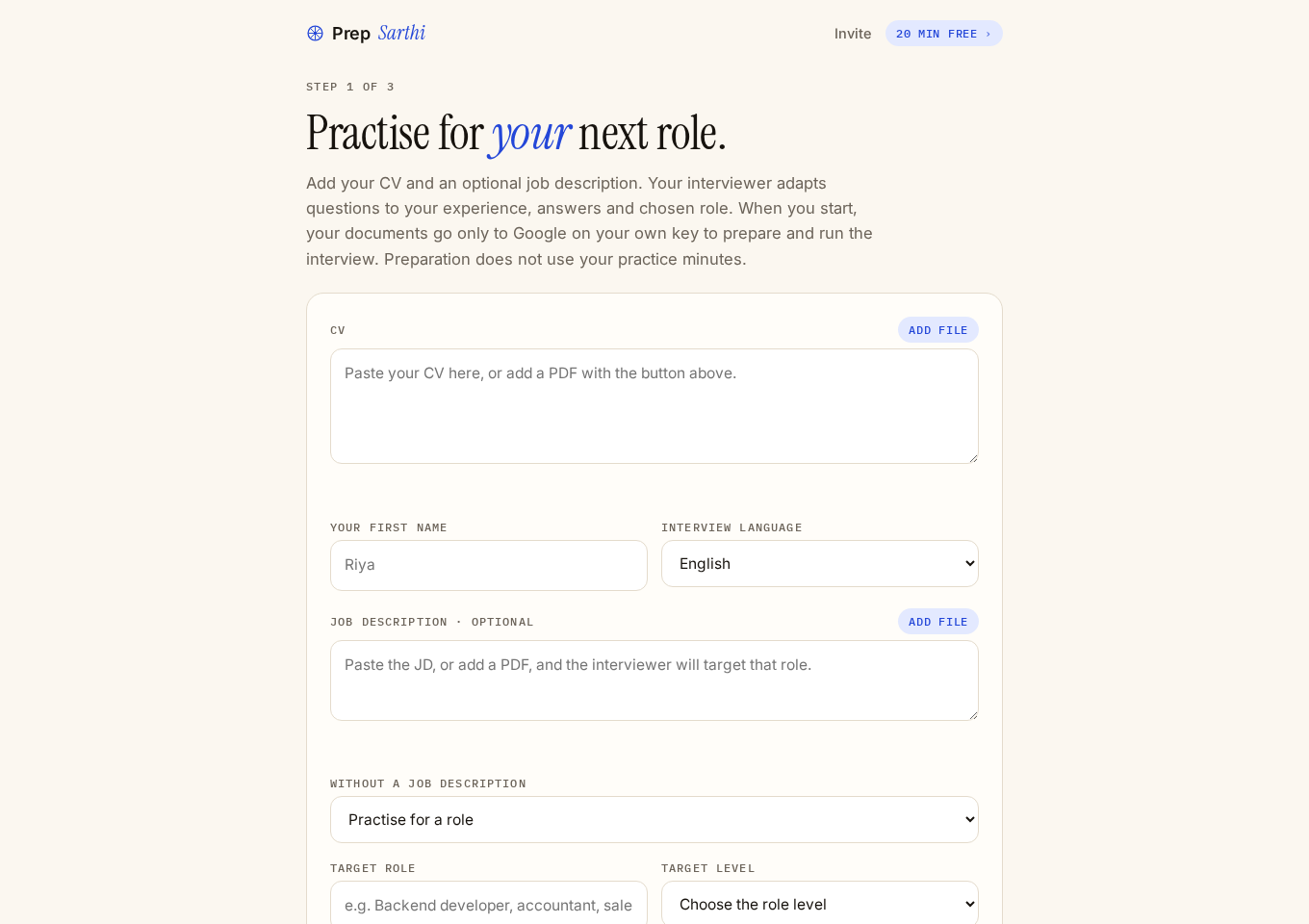 Try a free AI mock interview
See how to practise from your resume. Still looking for a role? Apply Sarthi brings jobs from multiple sources together. For permitted assistance during a real call, see Live Sarthi.